
Paste a link, get the card: six import sources, tested one by one
Foreverse now imports character cards straight from pasted links: chub.ai, JanitorAI, Pygmalion, RisuRealm, AICC, plus public png/json/charx file URLs. A site-by-site test log — what the links look like, what comes through, where each source bites, and the honest limits.
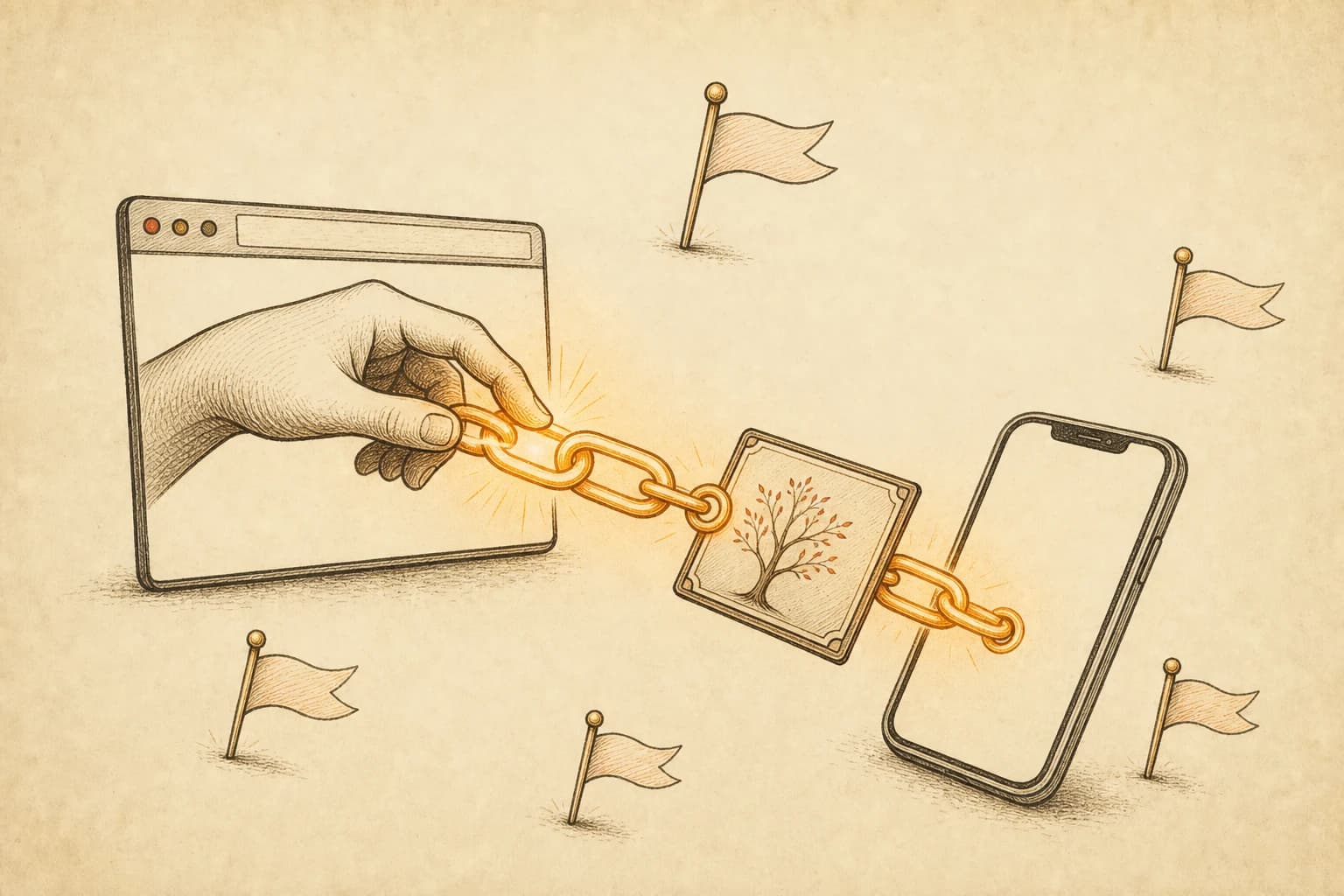
The feature exists because a user complained, and the complaint was fair: “Cards get shared as links now, not files. You only accept chub links — for a Janitor card I have to boot a computer, download the PNG, and shuttle it to my phone.” The complaint was right about the culture, too. Watch any card-sharing community for a week and files barely appear anymore; what circulates is URLs, because a link survives reposting while a PNG attachment risks being recompressed into a dead card by the first messenger that decides to optimize it. So we wired up the download protocols of the major card sites and then tested each one against real networks until we trusted it. The import-from-link box in Foreverse's phone tavern now takes six sources: chub.ai, JanitorAI, Pygmalion, RisuRealm, AICC, and public png / json / charx file URLs. Here is the site-by-site log — link shapes, what actually comes through, and where each source bites.
chub.ai: the most complete source, lorebooks included
Card links look like chub.ai/characters/author/card-name; the characterhub.org domain resolves the same way. What arrives is the card in standard format with its avatar art, tags, and creator notes attached — and because the format is the community standard rather than anything of ours, the same card opens in desktop SillyTavern unchanged. chub's bonus feature: lorebooks have their own pages there, and pasting a chub.ai/lorebooks/… URL imports a standalone lorebook directly, no carrier card required. Among the five sites it is the only one where that works. The one failure mode is access: private and deleted cards return a clear “card not found” — that is not a network hiccup, and retrying on another connection will not change it.
JanitorAI: two domains accepted, your network is the variable
Character URLs carry a long hyphenated ID, roughly janitorai.com/characters/long-id_card-name. Plenty of people grab links from the jannyai mirror instead; those work unchanged. Janitor advertises fifteen million users on its own homepage — this is the site the complaint in our intro was about — and the import lands the original card PNG, the full file as the author published it, nothing re-encoded on the way. The only variable we found in testing was the network itself: Janitor's download route sits behind a bot check, and certain environments — data-center egress points especially — get intercepted. When it happens the app says so explicitly and suggests trying another network. Take the suggestion literally: our own data-center test line got blocked reliably, and the community documentation around these endpoints says the same thing — the filter aims at server IPs, while ordinary phone connections mostly pass.
Pygmalion and AICC: the quiet pair
No war stories here — both passed on the first try and kept passing. Pygmalion links look like pygmalion.chat/character/long-id and deliver a JSON card plus its avatar. For AICC (aicharactercards.com), paste the card page URL; the site's 2026 redesign added a category segment to its paths, which the importer handles without caring. Paste, preview, confirm. Done. If every source behaved like these two, this post would be three paragraphs long.
RisuRealm: the author decides
Links look like realm.risuai.net/character/long-id, and the import is a PNG that tends to run big — we measured a single card at 12.7MB, art and embedded assets included. The catch on this site is policy, not protocol: authors can switch off downloads for their own cards. Hit one and the app reports that the author has disabled downloading, usable on the original site only. That is the platform honoring a creator's choice, not a bug, and no amount of retrying will route around it.
Public file URLs: the catch-all lane
Cards living outside those five sites still come in if a public https link points at the file itself — anything ending in .png, .json, or .charx. Image hosts and GitHub raw links are the usual suspects; charx, if you have not met it, is the packaged format from the v3 card spec, assets bundled inside, and it previews the same way the others do. The single requirement: the URL must reference the file, not a page displaying it. The link you get from “copy image address” qualifies; the tab's address bar usually does not.
The limits, stated plainly
Files cap at 32MB — past that the import refuses outright rather than truncating. In practice the ceiling is generous headroom, not a squeeze: the largest genuine card we met across all five sites was that 12.7MB Risu specimen, well under half the limit. Only card detail pages resolve; search results, profiles, and favorites lists parse to nothing. Bot checks and author-disabled downloads behave as described above, each with its own message. And one deliberate restraint: on entering the import screen, the app glances at your clipboard and offers one-tap import when a card link from these six sources is sitting there — but an ordinary image URL you happened to copy is intentionally ignored. Recognizing everything would mean prompting on every screenshot you copy, which is nagging dressed up as convenience.
The first thing to do after importing
Every import shows a preview first — name, avatar, fields — and nothing lands until you confirm, so a mislabeled link costs you a glance, not a cluttered library. Once in, the card is a local file on your phone: not uploaded, not synced, a boundary the data walkthrough covers in full. Attach a text model (your own key or the official channel) and start chatting; edit any field whenever you like; re-export the result as a standard chara_card_v3 file and send it back to whoever sent it to you. And if a link refuses to cooperate and you fall back to file transfer, the classic failure modes — messenger-app recompression above all — are catalogued in the card formats explainer.
The import screen also keeps a row of shortcuts out to each site. Browse, find a card, copy its link, switch back — the recognition banner is already waiting. And when what you got is a file and you are not sure it even carries card data, drop it into the character card checker in a browser tab first — spec version, fields and an import verdict, nothing uploaded.
FAQ
How do I import a JanitorAI card to my phone?
Open the character's page on Janitor, copy the address-bar URL, and paste it into Foreverse's import-from-link box — jannyai mirror links work identically. One caveat: Janitor's download route sits behind a bot check that blocks some networks. The app tells you when that happens, and the remedy is retrying on a different network — mobile data instead of Wi-Fi, say.
Do lorebooks come along with the card?
Two cases. A character book embedded in the card travels with it from any site — import the card, get the book. Standalone lorebooks are link-importable from chub only: paste a chub lorebooks URL and it arrives as a proper lorebook. Standalone books hosted elsewhere still need the download-file-then-import route.
What are the most common reasons a link import fails?
In the order we hit them while testing: the link isn't a card detail page (search results and profile pages don't resolve); the card is private or deleted; a bot check intercepted the request, fixable by changing networks; the RisuRealm author disabled downloads, which nothing on our side can override; the file exceeds the 32MB cap. Each case gets its own message — never a bare "failed."
Does an imported card get uploaded to Foreverse servers?
No. A link import is your phone fetching the file directly from the card site; the result is stored as a local file on the device. Foreverse servers never see the request or the card. Chatting, editing, and re-exporting all happen on your phone afterward.
Questions or ideas? Join our Discord →