
Characters shouldn't die when the book ends
An opinion column: chat platforms gave AI characters a room but no biography — no origin, no stage, no future. Why the chat box is a dead end for character attachment, and what it looks like when one character can live on the page, on a stage, across the table, and by your side, carrying the same setting and visual identity.
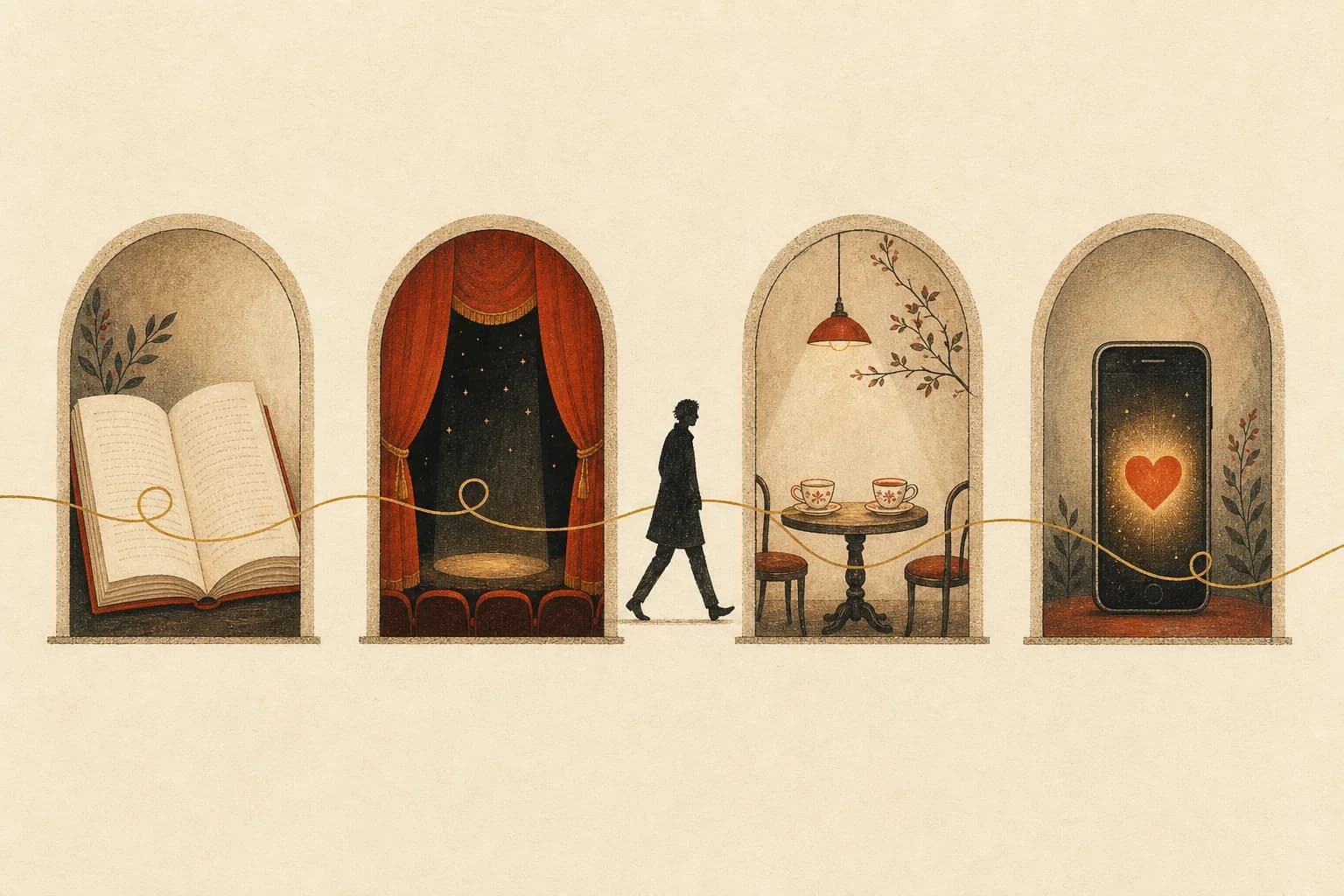
In October 2024, when a major chat platform purged thousands of user-made characters overnight, the grief on Reddit read like obituaries. People weren't mourning software. They were mourning someone they'd talked to every day for a year — someone who, it turned out, had lived their entire life inside a rented room with no door.
That's the part the AI roleplay industry got wrong, and it got it wrong at the architecture level: it gave characters a room but no biography.
The chat box is a dead end
Think about what a character on a chat-first platform actually is. No origin — they came from a text field, not from a story you lived through. No stage — they can't show you their world; they can only describe it in second person, forever. And no future — when the platform changes its filter, its model, or its mind, there is nowhere for them to go. The character is the room. Demolish the room, demolish the person.
Attachment doesn't work like that anywhere else in fiction. The characters people tattoo on their arms come from somewhere — three thousand pages of a fantasy saga, a hundred hours of a game. The story is the biography; the biography is why the attachment holds. Chat platforms tried to shortcut this with a personality paragraph, and the results speak for themselves: characters who forget your name after forty turns, and archives that vanish on a policy change.
What a biography looks like, technically
We build a mobile reader-plus-roleplay app, so our answer starts from the book. One character, four places to exist — and the connections between them are data, not marketing copy.
On the page, you meet the character inside an actual novel — maybe one you imported, maybe one you continued with AI, every direction preserved as a branch. On the stage, the chapter performs itself as a visual novel: nameplates, typewriter dialogue, choices — and a confirmed choice writes a real branch back into the same book. Across the table, you chat with the character card that carries the book's worldbook, so they arrive knowing their own story. And by your side, promoted to a companion with their persona and avatar, they build line-editable long-term memory from your days together, remember anniversaries first, and — once you switch proactive messages on — text you at night on their own, drawing selfies from the same confirmed reference set you gave their illustrations.
Read that paragraph again and notice what's absent: no step requires abandoning the previous one. The book keeps growing while the companion lives. The stage keeps performing what the branches accumulate. It's one biography with four chapters open at once.
And the exit door is real
The last thing a biography needs is an ending that belongs to you. A companion here exports as a standard character card — the same chara_card_v3 format the SillyTavern ecosystem reads — with the memories you explicitly select traveling as the card's lorebook. Give the card to a friend and the character grows new branches on someone else's phone. Data lives on your device as files; leaving is a copy operation, not a hostage negotiation.
To be fair about the trade-off: if all you want is casual, zero-setup chat with a thousand community characters, a chat-first platform is genuinely simpler, and its onboarding beats ours. We're built for the person who wants the character to come from somewhere and be going somewhere.
We think the next generation of this category won't be judged by how well the character talks. It'll be judged by a colder question: when the platform has a bad day, does your character survive it? Ours does — because they never lived in the room to begin with. They live in the book, and in a home on your phone.
FAQ
What does 'four lives of a character' mean concretely?
One character, four connected surfaces: continued and illustrated inside the novel (page), performing chapters as a visual novel with choices that write real branches (stage), chatting with the full card and worldbook attached (table), and promoted to a companion with line-editable long-term memory and optional proactive messages (side). Each step shares the same data — not four disconnected features.
How is this different from Character.AI or Replika?
Chat-first platforms hold the middle of the journey and nothing else: characters have no origin (no book they came from), no stage, and no exportable future. Here a character can enter from a novel you actually read, and leave as a standard character card carrying selected memories — the platforms around a single chat box can't do either. If all you want is casual chat with zero setup, a chat-first platform is honestly simpler.
Does the companion know my reading progress?
No — deliberately. A companion remembers what you told it and what happened between you; it does not surveil what you read. We drew that line on purpose and it stays.
Can I take my character with me if I leave?
Yes. Companions export as standard chara_card_v3 character cards, with memories you explicitly select becoming the card's lorebook. Cards, chats, and memory live as local files on your device in the first place.
Questions or ideas? Join our Discord →